
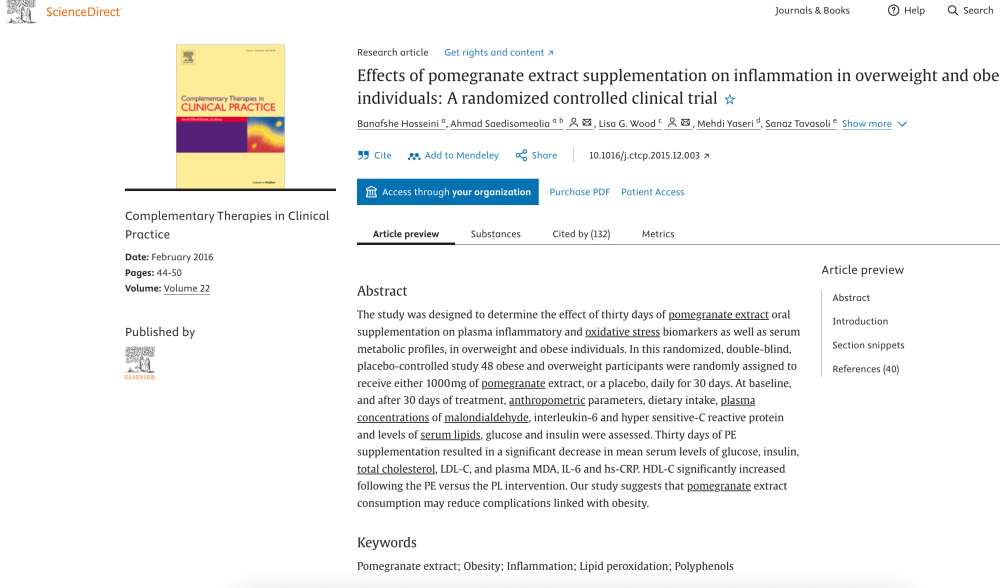
Abstract
- Background
Overweight and obesity are strongly associated with a pathological state of chronic, low-grade systemic inflammation, elevated oxidative stress, and profound metabolic dysregulation, collectively increasing the risk of insulin resistance, dyslipidemia, and cardiovascular complications. Pomegranate (Punica granatum L.) is widely recognized as a rich botanical source of bioactive polyphenols, ellagitannins, and antioxidants capable of modulating inflammatory pathways and improving metabolic profiles. While various studies have explored the systemic benefits of pomegranate, this randomized controlled trial was specifically designed to determine the short-term physiological effects of thirty days of oral pomegranate extract (PE) supplementation on plasma inflammatory biomarkers, oxidative stress indices, and serum metabolic profiles in an overweight and obese human cohort.
- Methods
A rigorous, randomized, double-blind, placebo-controlled clinical trial was conducted involving a total of 48 adult participants classified as overweight or obese. Subjects were randomly assigned to receive either a daily oral dose of 1000 mg of standardized pomegranate extract or an organoleptically matched placebo for a duration of 30 consecutive days. Comprehensive clinical evaluations were performed at baseline and immediately following the 30-day intervention period. Assessed parameters included anthropometric measurements, dietary intake tracking, and the quantification of plasma concentrations of malondialdehyde (MDA) as a marker of oxidative stress, interleukin-6 (IL-6) and high-sensitivity C-reactive protein (hs-CRP) as systemic inflammatory biomarkers, alongside detailed serum lipid profiles (total cholesterol, LDL-C, HDL-C), fasting blood glucose, and circulating insulin levels.
- Results
Following thirty days of continuous supplementation, the pomegranate extract (PE) intervention group demonstrated statistically significant improvements across multiple metabolic, inflammatory, and oxidative stress endpoints compared to the placebo cohort:
Reduction of Oxidative Stress & Inflammation: PE supplementation resulted in a statistically significant decrease in plasma concentrations of malondialdehyde (MDA), alongside marked reductions in key pro-inflammatory biomarkers, including interleukin-6 (IL-6) and high-sensitivity C-reactive protein (hs-CRP).
Improvement of Metabolic Profiles & Glycemia: Participants receiving PE exhibited significant decreases in mean serum levels of fasting blood glucose, circulating insulin, total cholesterol, and atherogenic low-density lipoprotein cholesterol (LDL-C).
Enhancement of HDL-C: High-density lipoprotein cholesterol (HDL-C) levels significantly increased following the PE intervention compared to the placebo control group.
- Conclusions
Oral supplementation with 1000 mg of pomegranate extract daily for thirty days effectively attenuates oxidative stress, reduces systemic inflammation, and improves key metabolic and lipid parameters in overweight and obese individuals. These clinical findings strongly suggest that short-term pomegranate extract consumption may serve as a valuable nutritional strategy to mitigate pathological complications and cardiometabolic risks linked with obesity.
https://www.sciencedirect.com/science/article/abs/pii/S174438811530027X