
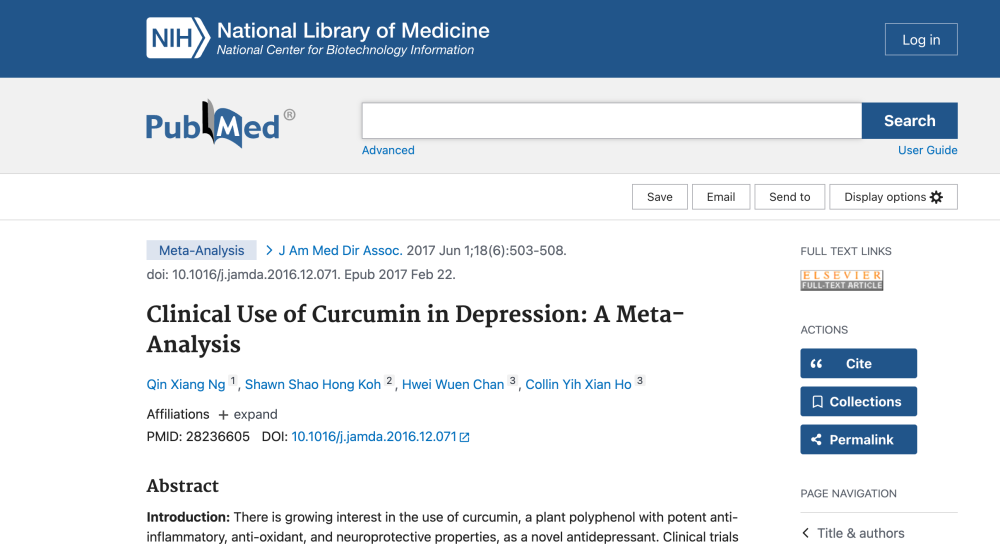
Abstract
- Introduction
Major depressive disorder (MDD) represents a debilitating psychiatric condition characterized by persistent depressed mood, emotional dysregulation, and neurocognitive impairment. Contemporary neurobiological research highlights chronic low-grade neuroinflammation, oxidative stress, and monoaminergic dysregulation as core pathogenic drivers of depressive illness. Amidst growing scientific interest in safe botanical therapeutics, curcumin—the primary bioactive plant polyphenol extracted from the rhizomes of Curcuma longa (turmeric)—has emerged as a promising novel antidepressant due to its potent anti-inflammatory, antioxidant, and neuroprotective properties. While individual clinical investigations have yielded somewhat conflicting conclusions regarding its standalone and adjunctive efficacy, a comprehensive quantitative synthesis of existing data remained necessary to establish definitive clinical evidence and guide future research directions.
- Methods
A systematic literature search was executed utilizing targeted keyword combinations—specifically [curcumin OR diferuloylmethane OR curcuminoid OR turmeric OR Indian saffron] AND [depression OR MDD OR suicide]—across major scientific databases, including PubMed, Ovid, the Clinical Trials Register of the Cochrane Collaboration Depression, Anxiety and Neurosis Group (CCDANTR), and the Cochrane Field for Complementary Medicine database. The systematic search identified 2081 English-language articles published between January 1, 1960, and August 1, 2016. Following rigorous screening, six clinical trials comprising a cumulative total of 377 patients comparing curcumin supplementation to placebo controls were systematically reviewed and integrated into the meta-analysis. Methodological quality and risk of bias were formally evaluated across the trials.
- Results
Quantitative meta-analytic synthesis of the included clinical trials demonstrated statistically significant antidepressant and anxiolytic efficacy associated with curcumin intervention:
Reduction of Depressive Symptom Severity: Meta-analysis of patients with depression revealed a statistically significant pooled standardized mean difference from baseline Hamilton Rating Scale for Depression (HAM-D) scores (pooled standardized mean difference = -0.344; 95% confidence interval: -0.558 to -0.129; $P = 0.002$), confirming the robust clinical efficacy of curcumin in ameliorating depressive symptoms.
Anxiolytic Efficacy: Significant secondary anti-anxiety effects were formally reported in three of the evaluated clinical trials, highlighting broader affective benefits.
Biosafety & Tolerability Profile: Curcumin demonstrated an exceptional safety profile, with zero adverse events reported across any of the evaluated clinical trials. Furthermore, the majority of included studies maintained a low risk of bias (with the exception of one open-label trial and one single-blinded investigation).
Methodological Limitations: Limitations include a relatively small number of available studies, which precluded funnel plot or sensitivity analyses, alongside short study durations (ranging from 4 to 8 weeks) that restrict long-term efficacy conclusions.
- Conclusions
Curcumin is safe, exceptionally well-tolerated, and clinically efficacious in ameliorating depressive and anxious symptoms among patients suffering from depression. While current findings are encouraging, robust, large-scale randomized controlled trials with extended follow-up durations are strongly warranted to conclusively ascertain long-term therapeutic benefits.
https://pubmed.ncbi.nlm.nih.gov/28236605/